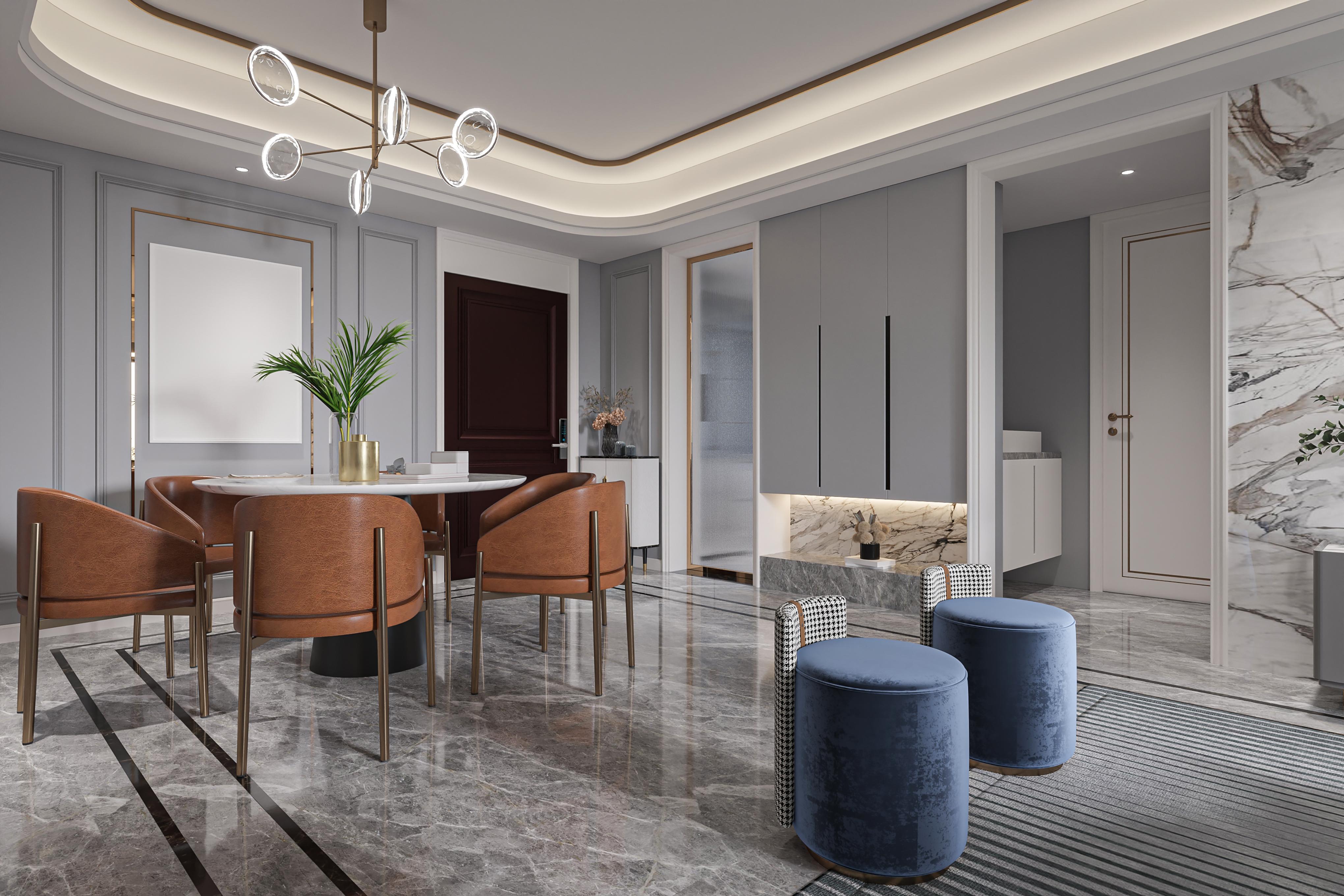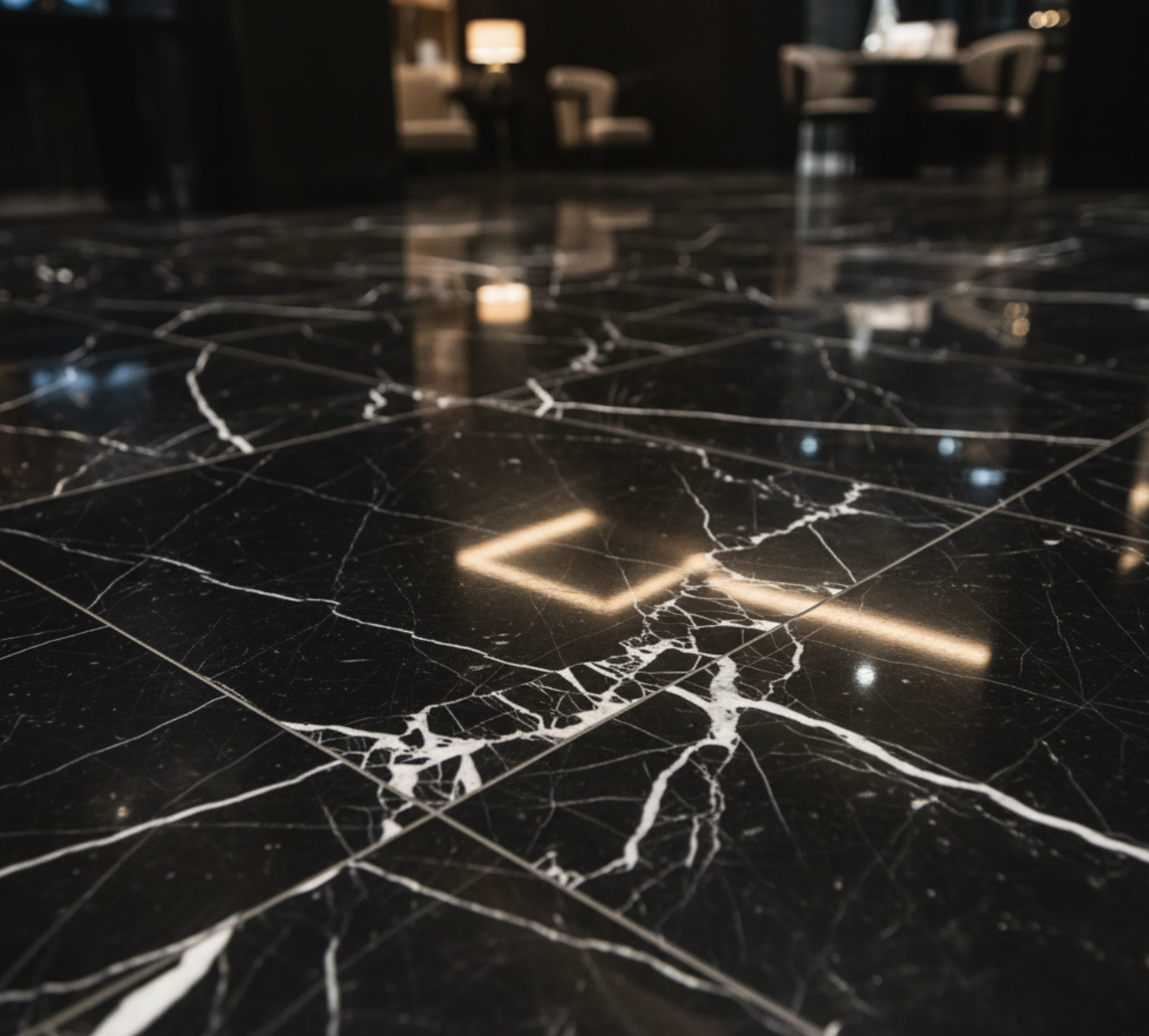
Commercial Flooring Stone for High-Traffic Environments
When commercial flooring fails, the issue rarely appears on day one. It emerges months later—edges chip under rolling carts, joints widen due to improper calibration, or polished surfaces become hazardous in wet conditions. Retail stores, office buildings, shopping centers, airports, and healthcare facilities demand more than visual appeal. They require flooring systems capable of sustained structural performance.
Commercial flooring stone must be selected, fabricated, and installed with operational load, maintenance cycles, and public safety in mind. Stonesale supports commercial projects by combining density-based stone selection, precision cutting, finish-specific testing, and export-grade packaging to reduce long-term risk across large installations.
Material Selection Based on Load and Traffic Patterns
Commercial applications require stronger structural properties than most residential spaces. Stone categories typically used include granite, dense marble, limestone with higher compressive ratings, and engineered quartz for controlled environments.
Typical structural benchmarks for commercial stone flooring:
- Density: 2.6–2.8 g/cm³
- Water absorption: ≤0.6%
- Compressive strength: 120–200 MPa
- Flexural strength: ≥12 MPa
ASTM C615 (Granite) and ASTM C503 (Marble) outline performance classifications suitable for heavy-use environments. For areas with constant pedestrian flow—such as shopping malls or transport hubs—denser stones like granite or basalt are commonly specified.
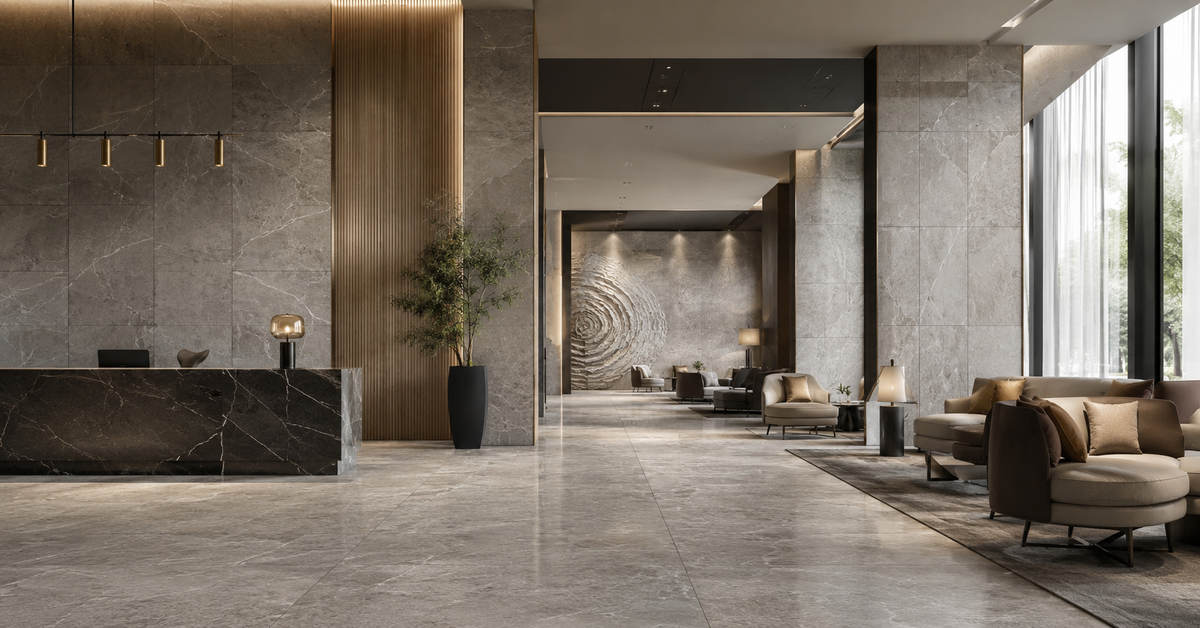
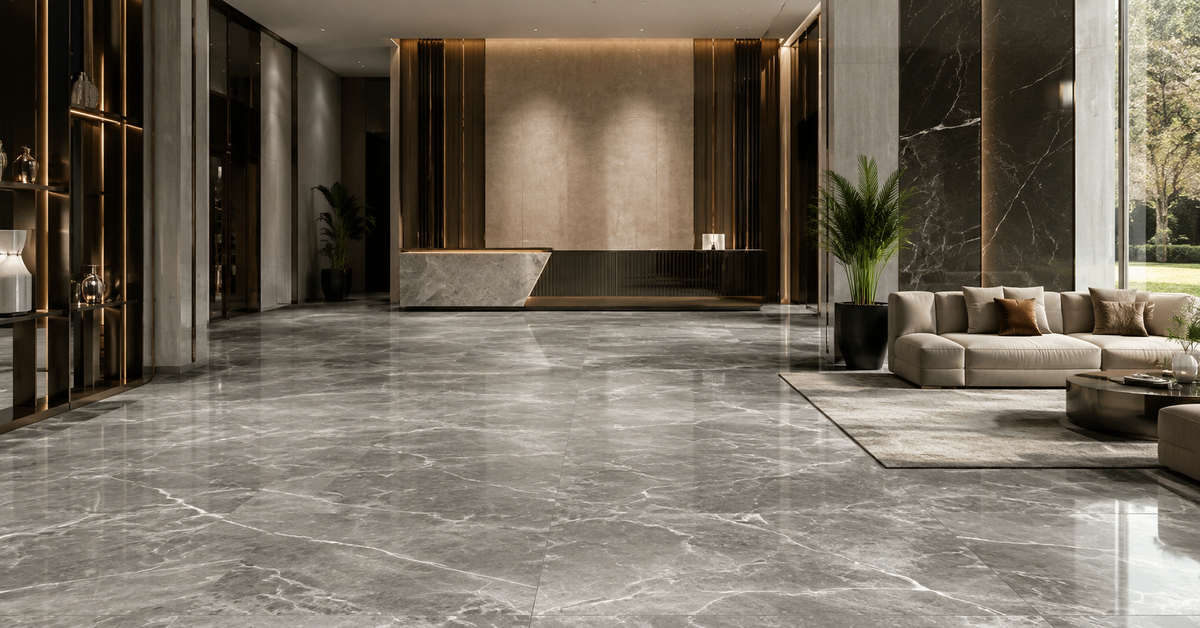
Stone floor tiles for business environments are often produced in 600×600 mm, 800×800 mm, 1200×600 mm, or custom large-format configurations to minimize grout lines and simplify maintenance.
Surface Finish and Slip Resistance in Public Spaces
Surface finish directly impacts both safety and cleaning routines. ANSI A326.3 establishes Dynamic Coefficient of Friction (DCOF) recommendations for interior commercial flooring.
Finish options vary depending on application:
| Finish Type | Appearance | Suitable Use Case |
|---|---|---|
| Polished | High gloss | Corporate lobbies |
| Honed | Matte smooth | Office corridors |
| Flamed | Textured | Transit areas |
| Bush-hammered | Rough surface | Outdoor commercial entries |
In high-moisture areas such as shopping mall entrances or healthcare facilities, honed or textured finishes are often preferred to reduce slip risk.
Structural Preparation and Installation Standards
Even high-density stone will fail if the substrate is unstable. The Tile Council of North America (TCNA Handbook) emphasizes flatness control and movement joint integration for commercial stone flooring systems.
Key installation parameters include:
- Substrate flatness tolerance within ±3 mm over 3 meters
- Load-rated adhesive systems
- Expansion joints placed at structural transitions
- Cure time before full traffic exposure
For projects involving heavy equipment or rolling loads, structural engineers often assess floor load distribution prior to installation.
Large Format Stone and Visual Continuity
Modern commercial design trends favor large format stone flooring to create open visual flow. However, increasing tile dimensions requires tighter fabrication control.
Stonesale maintains:
- CNC cutting tolerance within ±0.3–0.5 mm
- Thickness calibration for level alignment
- Batch grouping for consistent tone
- Edge straightness verification
Large format stone flooring reduces grout lines, improves maintenance efficiency, and enhances spatial clarity in public environments.
Compliance, Inspection, and Export Packaging
Commercial flooring stone projects must align with both local and international standards. Stonesale implements:
- ASTM and EN dimensional compliance
- Water absorption testing
- Surface flatness inspection
- Impact resistance verification
Tiles are separated by protective layers and packed in ISPM 15-certified wooden crates. Container load distribution plans reduce vibration stress during shipping, particularly for large-format commercial stone tiles.
Pre-shipment inspection reports and production photos are provided before dispatch.
Common Commercial Applications
Commercial flooring stone is widely used in:
- Office building lobbies
- Shopping centers
- Airport terminals
- Hotels and conference centers
- Healthcare facilities
- Educational institutions
Each environment demands different surface textures, load tolerance levels, and cleaning considerations.
Q&A: Commercial Project Considerations
Q: Is marble suitable for commercial flooring?
Yes, when dense varieties are selected and maintenance protocols are applied. Granite may offer higher abrasion resistance for extreme traffic areas.
Q: How is color consistency maintained across large projects?
Stone blocks are grouped and processed in controlled batches to maintain tone uniformity.
Q: What is typical production lead time for commercial flooring projects?
Most commercial projects require 4–8 weeks depending on size and customization.
Structured Supply for Commercial Flooring Projects
Commercial flooring stone must balance structural stability, slip performance, and visual continuity. Through controlled fabrication, calibrated sizing, finish-specific testing, and export-grade logistics, Stonesale supports retail, office, and public infrastructure projects requiring consistent long-term performance.
For specifications, large-format samples, or project consultation, visit https://www.stonesale.com/ or contact the project team via https://www.stonesale.com/contact-us.