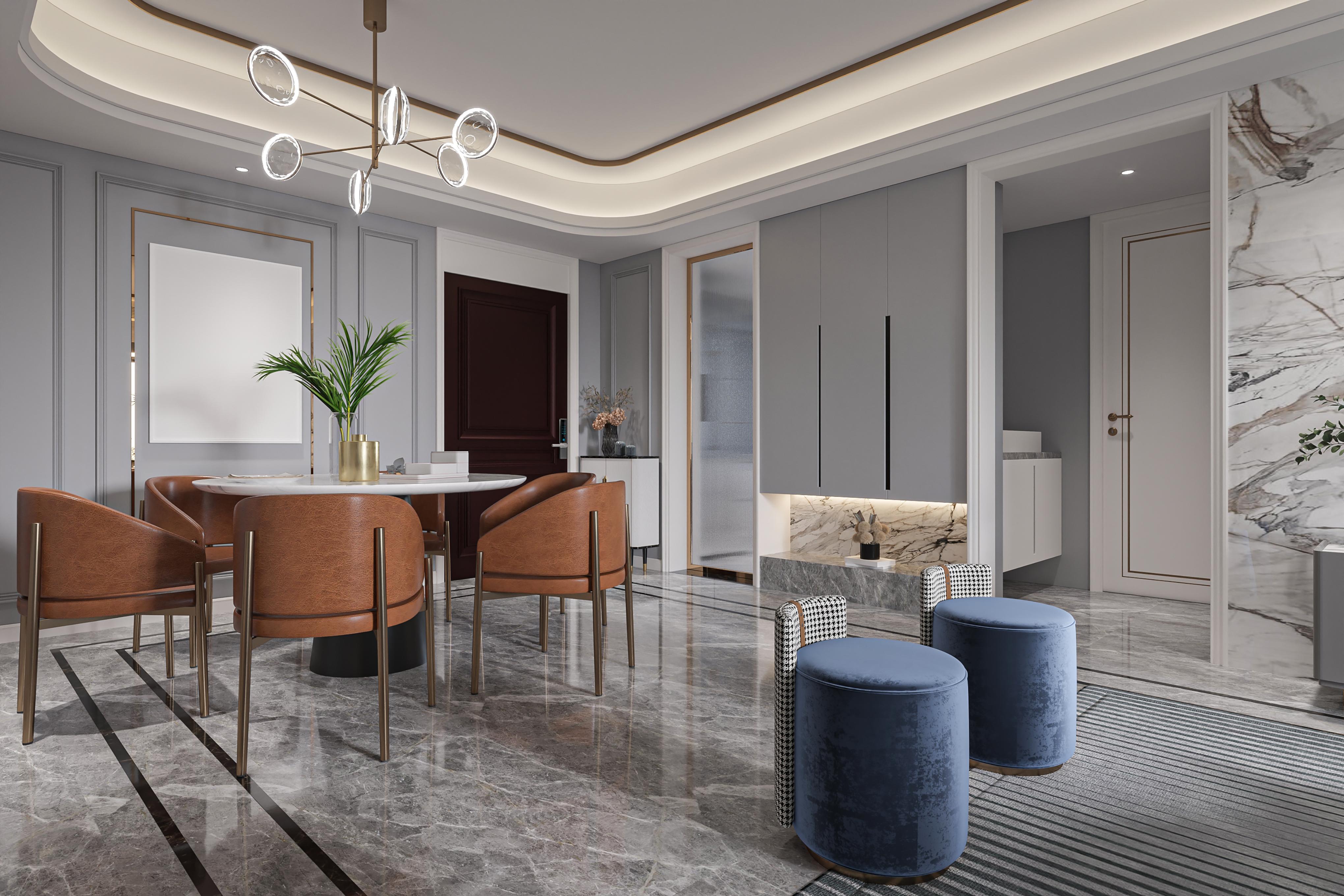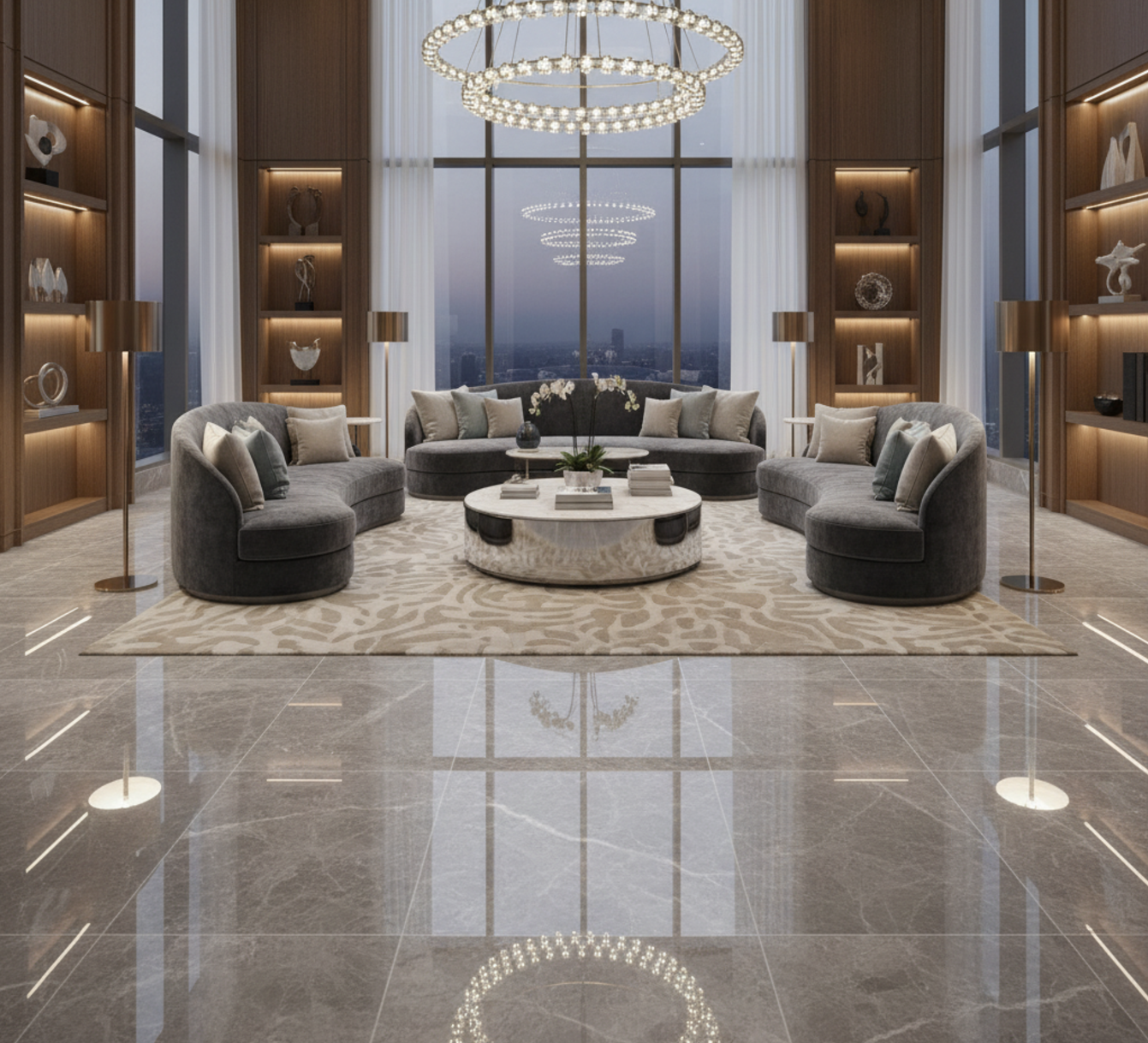
Custom Stone Flooring for Architectural Projects
In many construction projects, flooring is not simply a finishing layer—it becomes a defining architectural feature. Yet standard tile dimensions and pre-set formats often fail to align with spatial proportions, lighting design, or structural layout. Uneven joints, excessive cutting on-site, and inconsistent material batches can disrupt installation schedules and compromise visual continuity.
Custom stone flooring addresses these challenges by integrating design intent with fabrication precision. Stonesale supports developers, architects, and distributors by producing tailored flooring systems based on detailed drawings and structural requirements. Through calibrated cutting, controlled surface finishing, and batch-level inspection, custom flooring transitions from concept to installation with minimal deviation.
Material Selection for Custom Flooring Systems
Before fabrication begins, selecting the appropriate stone is critical. Each material responds differently to load, climate, and finishing processes.
| Stone Type | Density (g/cm³) | Compressive Strength | Recommended Use |
|---|---|---|---|
| Granite | 2.6–2.8 | >150 MPa | High-traffic commercial floors |
| Marble | 2.6–2.7 | 100–140 MPa | Interior luxury flooring |
| Limestone | 2.3–2.6 | 80–120 MPa | Residential interiors |
| Quartz (Engineered) | 2.3–2.4 | Uniform structure | Consistent color large projects |
Granite is commonly selected for structural durability, while marble provides distinctive veining for interior architectural expression. Quartz offers uniformity when large-scale color consistency is required.
By grading raw blocks for density and vein direction before cutting, Stonesale ensures custom flooring maintains structural integrity and aesthetic balance across project zones.
Precision Fabrication and Dimensional Accuracy
Custom stone flooring depends heavily on fabrication accuracy. Minor dimensional inconsistencies become magnified over large surfaces. Stonesale integrates CNC cutting systems and digital calibration tools to maintain tight tolerances.
| Fabrication Stage | Control Focus | Benefit |
|---|---|---|
| Digital Layout Review | CAD drawing alignment | Exact dimension replication |
| CNC Cutting | Millimeter precision | Reduced on-site trimming |
| Thickness Calibration | ±0.3–0.5 mm tolerance | Smooth installation plane |
| Edge Profiling | Beveled, mitered, eased edges | Seamless transitions |
| Surface Finishing | Polished, honed, brushed | Functional adaptation |
Tiles can be labeled according to installation sequence, allowing contractors to follow pre-defined placement zones and reduce alignment errors.
Surface Finishes and Functional Performance
Finish selection affects both safety and visual impact.
| Finish Type | Surface Behavior | Application |
|---|---|---|
| Polished | Reflective and smooth | Lobbies and reception halls |
| Honed | Matte surface | Residential interiors |
| Brushed | Light texture | Retail environments |
| Flamed (Granite) | Slip-resistant | Outdoor terraces |
Slip resistance in flooring applications is evaluated in accordance with ANSI A326.3 DCOF recommendations for wet areas. Proper finish selection enhances safety while maintaining design integrity.
Installation and Structural Considerations
Custom flooring systems must account for substrate preparation, expansion joints, and load distribution. The Tile Council of North America (TCNA Handbook) emphasizes maintaining appropriate joint spacing to prevent stress cracking caused by thermal expansion.
For large-format custom stone floors:
-
Substrate flatness should remain within ±3 mm over 3 meters
-
Proper adhesive selection ensures uniform bonding
-
Expansion joints accommodate movement
-
Load-bearing thickness varies depending on traffic conditions
By delivering dimensionally calibrated tiles, Stonesale simplifies these installation requirements and reduces adjustment time on site.
Safety, Compliance, and Export Reliability
Custom stone flooring must comply with international construction standards. Stonesale aligns production with ASTM C503 (marble) and ASTM C615 (granite) for dimension stone specifications, ensuring structural consistency.
Quality control measures include:
-
Water absorption testing
-
Compressive strength verification
-
Visual grading for surface integrity
-
Batch coding for traceability
For global shipment, tiles are separated with foam layers, reinforced with wooden crates compliant with ISPM 15 standards, and secured for long-distance transport. Pre-shipment inspection documentation ensures order accuracy before dispatch.
Application Across Architectural Sectors
Hospitality Projects
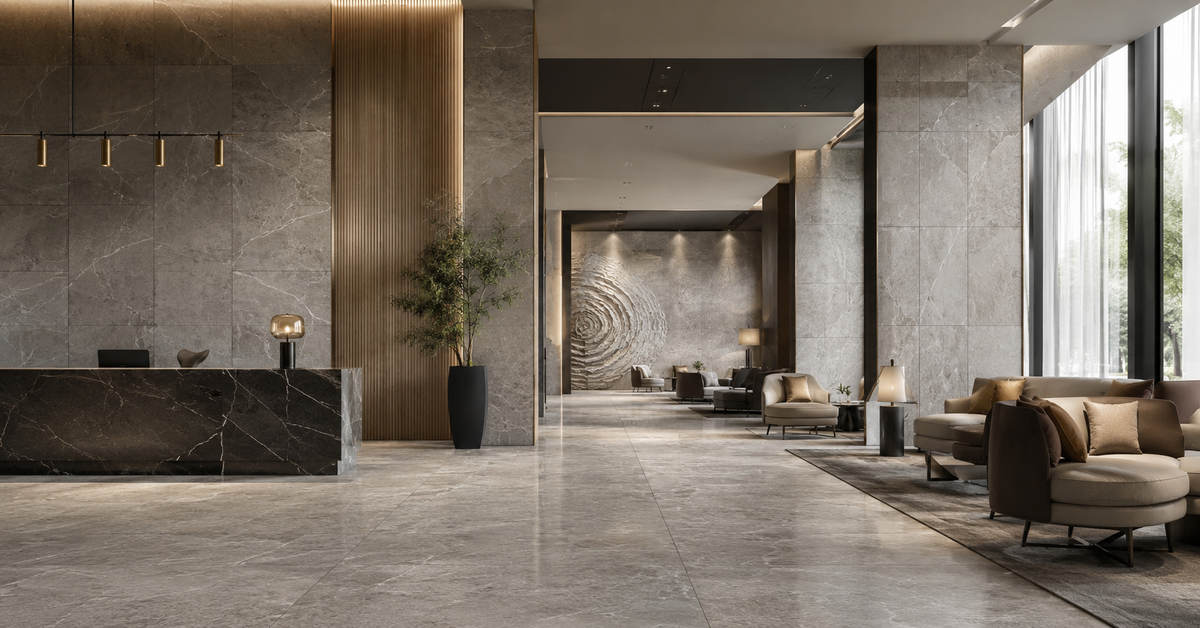
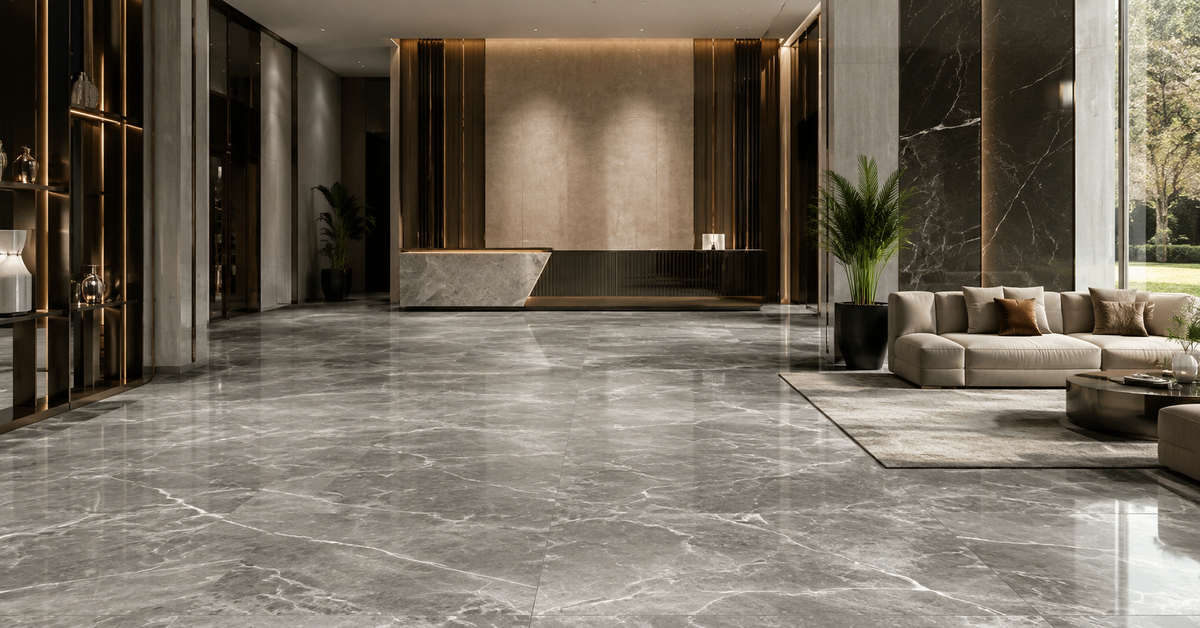
Custom marble flooring patterns create cohesive luxury interiors across lobbies and corridors.
Residential Villas
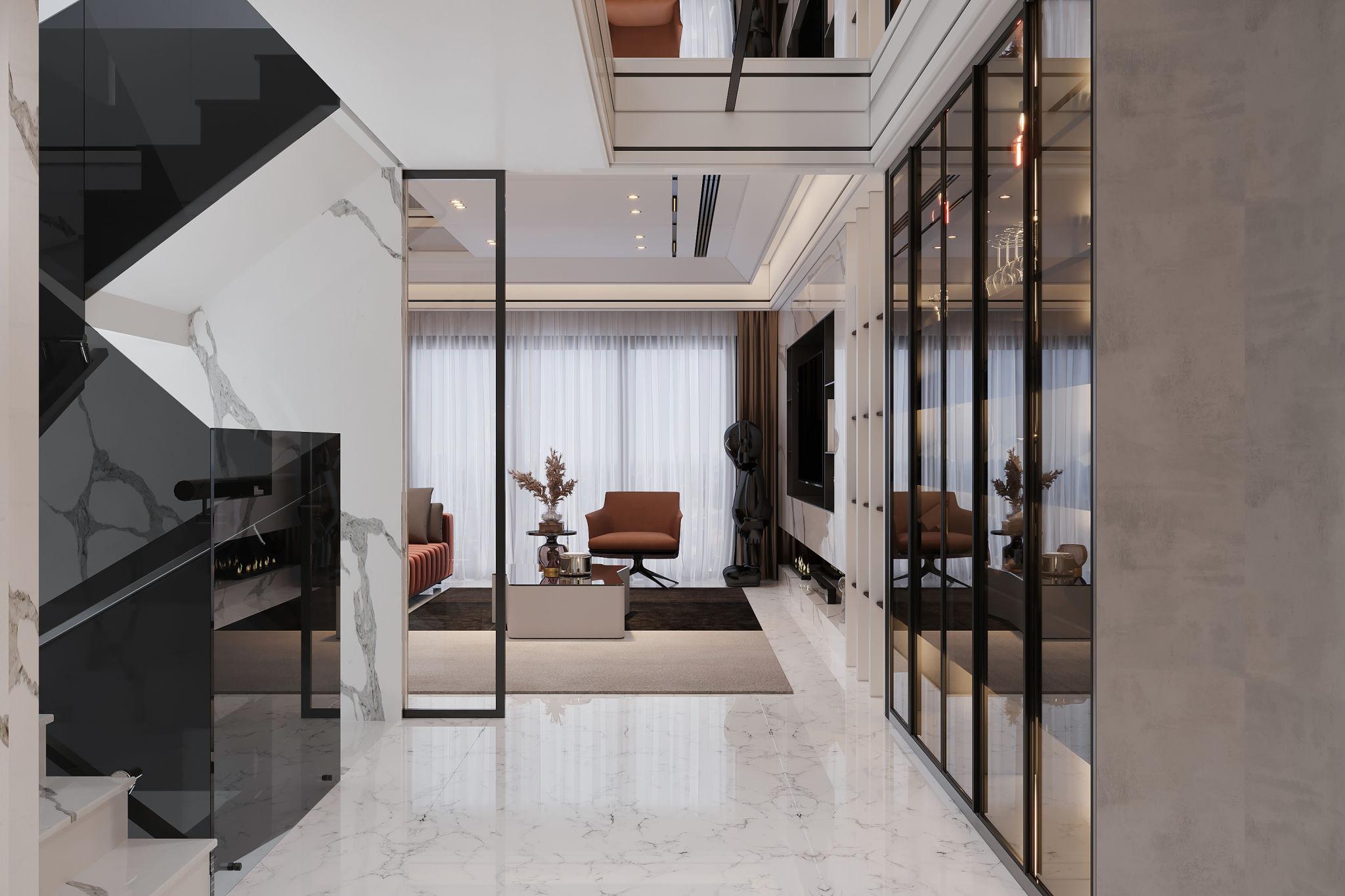
Tailored granite or limestone flooring integrates seamlessly with staircases and wall cladding.
Commercial Developments
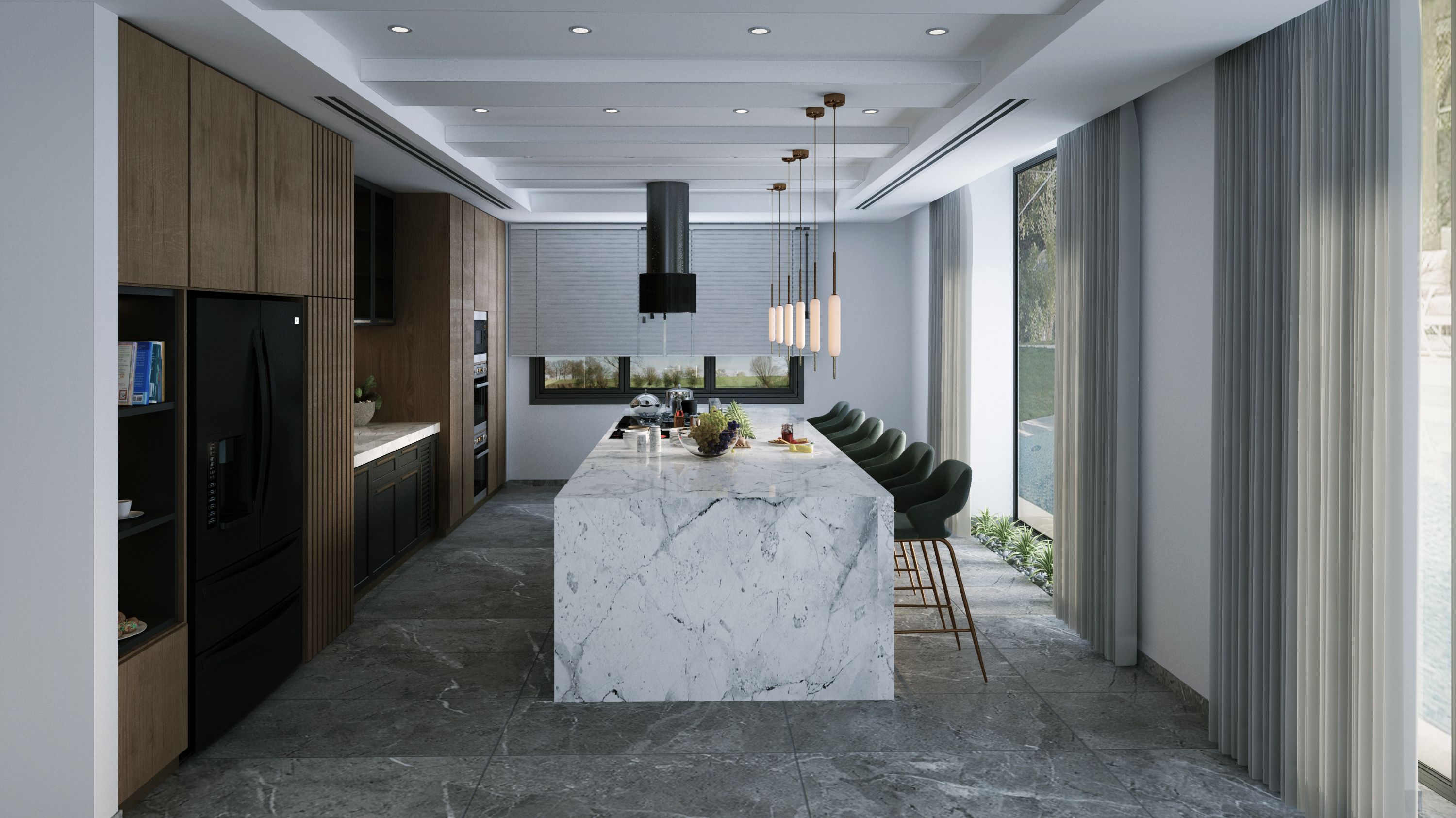
Precision-cut flooring reduces joint clutter and supports contemporary architectural minimalism.
Public Infrastructure
High-density granite flooring withstands heavy traffic and structural stress.
Q&A: Key Buyer Considerations
Q: What drawings are needed for custom stone flooring?
Detailed CAD or dimensioned layout plans ensure accurate fabrication.
Q: Can patterns or medallions be integrated?
Yes, waterjet-cut inlays and geometric patterns can be incorporated into custom layouts.
Q: How long is the production timeline?
Typically 4–6 weeks depending on complexity and order size.
Aligning Design Vision with Structural Precision
Custom stone flooring bridges architectural creativity and measurable performance. Through raw material grading, calibrated fabrication, compliance testing, and export-ready logistics, Stonesale supports projects requiring precision, durability, and aesthetic cohesion.
For detailed consultation or project-specific samples, visit https://www.stonesale.com/ or contact the team via https://www.stonesale.com/contact-us